“What is Time-Related underemployment?”
While unemployment often gets the headlines, time-related underemployment is another silent struggle facing many working South Africans.
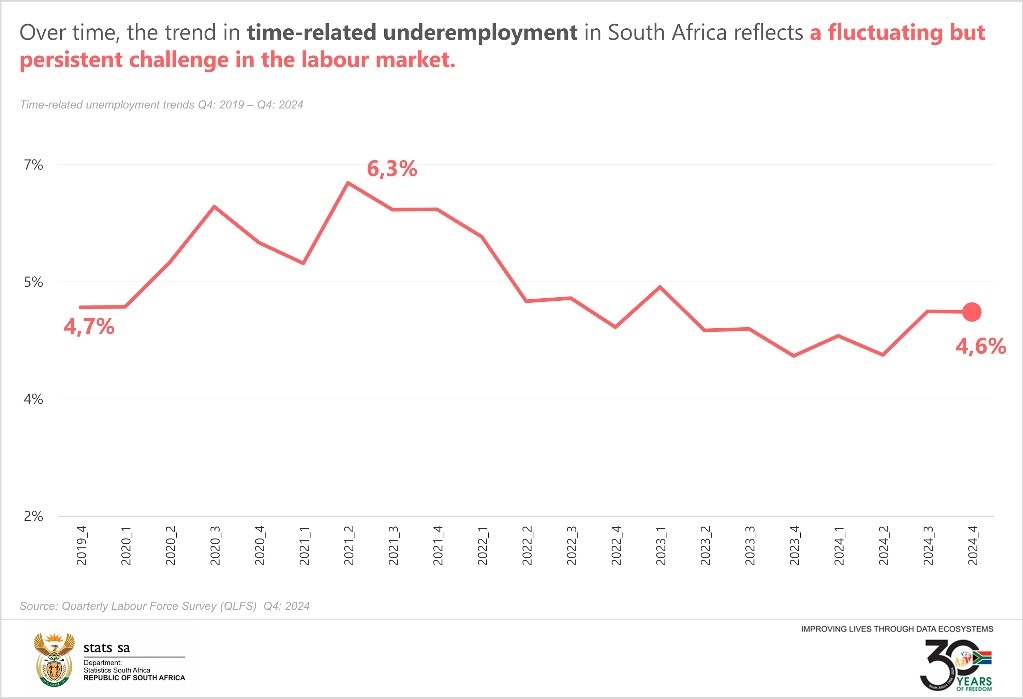
What Does It Mean?
Time-related underemployment happens when people have jobs, but:
- They work fewer than 35 hours a week, AND
- They want and are available to work more hours.
These are workers who are not fully unemployed, but their income and productivity are limited because they aren’t getting the hours they need to earn a decent living.
Why Does It Matter?
- It Hides the True Struggle
- The official unemployment rate doesn’t fully capture people who have work but earn too little because they work too few hours.
- It Affects Family Income
- Many households depend on part-time or casual workers who wish they could earn more but cannot find extra hours.
- It’s Growing in Key Sectors
- Domestic work, construction, and farming often have high underemployment rates.
- It Worsens Inequality
- Women and people in rural areas are more affected, deepening poverty and inequality.
Real Life Examples
- Sarah, a domestic worker who works two days a week, but used to work five days. She needs more clients, but there are none in her area.
- James, a builder who works one week a month. He waits for calls from construction companies that don’t come often.
- Maria, a farm worker who works only during harvest season, with no work in between.