Understanding South Africa’s VAT Increase: Impact and What It Means for You
Introduction
The South African government has announced an increase in the Value-Added Tax (VAT) rate from 15% to 16%, a move aimed at boosting revenue to support social programs and economic stability. While this may seem like a small adjustment, it has significant implications for consumers, businesses, and the broader economy.
Why is VAT Increasing?
The VAT increase is primarily driven by the government’s need to address budget deficits and fund critical services such as healthcare, education, social grants, and infrastructure development. With rising debt levels and economic pressures, increasing VAT is seen as one of the most effective ways to generate additional revenue.
Impact on Everyday South Africans
The increase in VAT will directly affect consumers by making most goods and services more expensive. Here’s how it will impact different areas of life:
- Cost of Goods and Services:
- Everyday essentials such as food, toiletries, clothing, and electronics will see a price hike.
- VAT-exempt or zero-rated goods like brown bread, maize meal, fruits, vegetables, and eggs will not be affected, offering some relief to lower-income households.
- Transport and Fuel Costs:
- The cost of petrol and diesel will rise, leading to higher transport costs.
- Commuters who rely on taxis, buses, and trains may see fare increases.
- Household Expenses:
- Electricity and water bills will increase due to VAT being applied to municipal services.
- Mobile data, airtime, and streaming services will cost more.
- Small Businesses and Employment:
- Businesses may pass the extra tax cost onto consumers, reducing sales and profitability.
- Employers may struggle with increased operating costs, which could impact salaries and job creation.
How Much Additional Revenue Will VAT Generate?
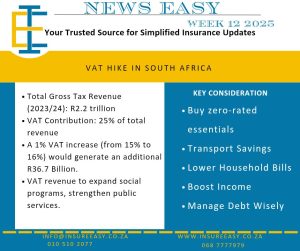
Based on the 2023/24 revenue figures, where VAT contributed approximately R550 billion, the 1% increase is expected to generate an additional R36.7 billion per year. The government intends to use this revenue for:
- Expanding social grants and the Social Relief of Distress (SRD) program.
- Strengthening public healthcare services and National Health Insurance (NHI) preparations.
- Improving education funding, including university and TVET college support.
- Investing in infrastructure and economic growth initiatives.
How to Manage the VAT Impact
To cope with rising costs, South Africans can take the following steps:
- Shop Smart: Focus on zero-rated essentials, buy in bulk, and take advantage of store promotions.
- Budget for Higher Costs: Adjust spending habits to account for increased utility, transport, and food expenses.
- Explore Additional Income Streams: Consider side hustles, freelancing, or reskilling to increase earnings.
- Limit Unnecessary Debt: Avoid excessive credit purchases, as interest rates may also rise.
- Monitor Government Spending: Hold policymakers accountable to ensure additional VAT revenue is used effectively.
Conclusion
While the VAT increase is aimed at stabilizing South Africa’s economy, it places additional pressure on consumers and businesses. By planning ahead, adjusting spending habits, and staying informed, individuals can better manage the impact and navigate the changing economic landscape.
Would you like to discuss ways to reduce household expenses further? Let us know in the comments below!