South Africa’s annual inflation rate eased to 5.2% in May 2025, a slight decline from 5.3% in April. While the overall figure shows a small improvement, many South African households continue to feel the pressure from high transport, electricity, and housing-related costs.
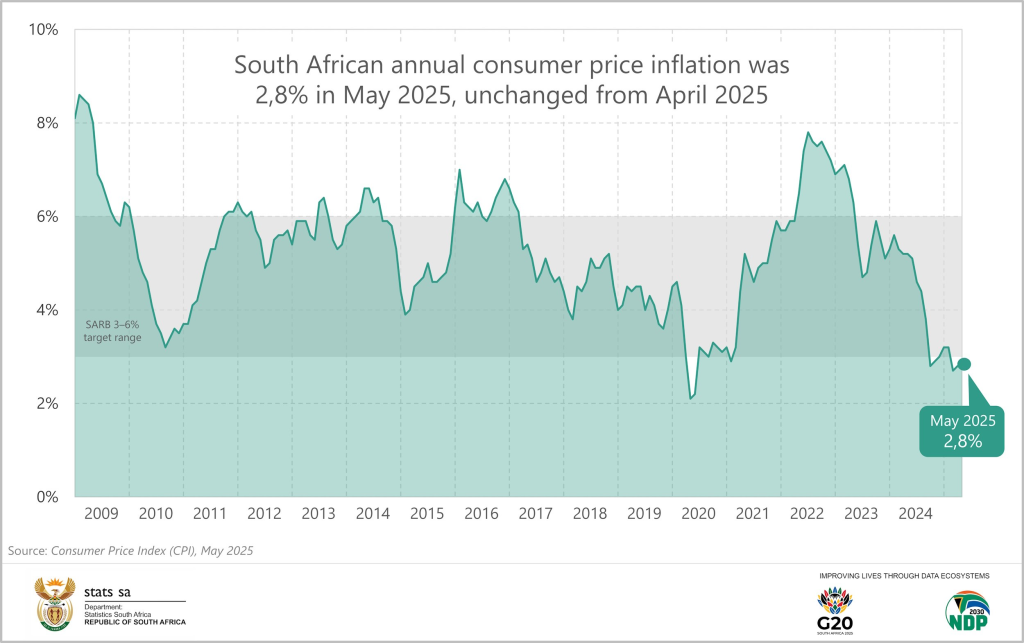
Food inflation came in at 4.7%, the lowest level since September 2020. Bread and cereals recorded a decline of 0.6%, the first drop in five years. This offers a small window of relief for families struggling with grocery bills, although many food items remain costly.
Transport remains a major driver of inflation. The cost of transport increased by 6.3% in May, with petrol prices rising by 9.3% compared to the previous year. This impacts not only vehicle owners but also commuters who rely on taxis and buses, as well as the price of goods that are transported across the country.
Housing and utilities increased by 5.7% year-on-year. Households are paying more for electricity, municipal rates, and services. These increases directly impact monthly budgets, especially for pensioners, grant recipients, and families living on fixed incomes.
Despite the slight overall improvement, the monthly inflation rate stayed unchanged at 0.2% between April and May. This shows that price increases continue steadily and remain a concern for working families.
What South Africans Should Consider
With fuel prices up, it’s important for vehicle owners to review their car insurance. If you’re driving less due to high petrol costs or working from home, your insurance premium might be reduced by adjusting your mileage.The easing in food prices is temporary. Households should take advantage of the price drop in basics like bread and maize meal to buy in bulk or save for other essentials. Avoid using credit or loans for food purchases, as repayment costs are often higher than the food itself.
Rising rates and electricity costs can catch people off guard. It’s a good time to check whether your insurance policy covers risks like power surges, geyser bursts, and fire. For renters, consider basic content cover for your valuables.
Many people only have funeral cover, but inflation impacts more than just burials. A broader insurance policy that includes accidental injury, legal support, or even limited income protection can go a long way in safeguarding your household against rising costs.
Lastly, the temptation to rely on short-term credit is high during inflationary periods, but interest payments can quickly become unmanageable. Rather speak to a registered financial advisor or community support organisation to explore affordable protection options.
Final Thoughts
Inflation might be slowing down slightly, but the cost of living continues to rise in essential areas like fuel, electricity, and rent. These are not optional expenses. The right advice, a small adjustment in your insurance coverage, and smarter budgeting can help you stretch your income further and avoid financial shocks.