Clean Water Still a Struggle for Millions in South Africa
What the General Household Survey (GHS) 2023 says about access to water and what it means for you.
Every South African deserves access to clean, safe water. But according to the latest General Household Survey (GHS) 2023, that is still not the reality for many, especially those living in rural areas.
Stats SA’s new report reveals that while most city households have water access, rural areas are still being left behind. This matters to everyone—because water affects your health, your time, your money, and your future.
Why It Matters to You
Water is not just about drinking. It affects everything—from cooking and cleaning to school, work, and staying healthy. The less time spent fetching water, the more time families can spend on education, income, and community.
Key Findings at a Glance
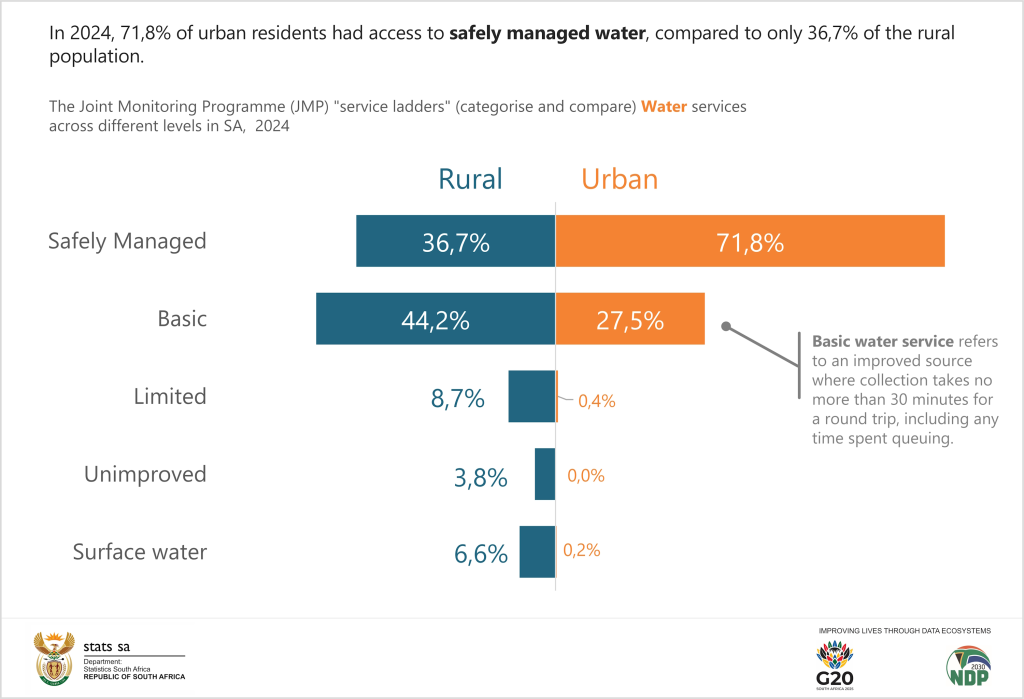
- Urban vs Rural: 71.8% of urban homes have access to safe water. In rural areas, only 36.7% do.
- Time Lost: 5% of households spend more than one hour a day fetching water.
- Hardest Hit: KwaZulu-Natal, Limpopo, and the Eastern Cape show the lowest access levels.
- Best Served: Western Cape (99.8%) and Gauteng (99.6%) have the highest water access.
- Rural Crisis: Most people using unsafe or surface water live in rural communities.
What You Can Do
Here are five things every family should consider:
- Protect Your Health
Always boil water from rivers or communal taps before drinking it. - Time is Precious
If your household spends hours collecting water, speak to your councillor or ward committee. - Demand Your Rights
Water is a basic human right. Report broken infrastructure. - Be Water-Wise
Collect rainwater, fix leaks, and teach kids to save water. - Act as a Community
Join local water forums to push for better services and maintenance.
Final Thought
Clean water should not depend on where you live. The GHS report reminds us that we must keep working toward a South Africa where every household—urban or rural—has clean, safe water close to home. 💧